Determinism and Stoicism

Man can indeed do what he wants, but he cannot will what he wants.
Arthur Schopenhauer
It is very likely that the outcome of most things in the world, including the desires1 and mental states2 of ourselves3 and others, are already predetermined4 by events in the distant past. A criminal or good Samaritan, for example, can be viewed as a person whose antecedent moral, social and genetic factors have resulted in them being bound, so to speak, to have either the desire to help others or a lack of self control resulting in the criminal act. This is not to say that they should not be punished or praised, for we know that such interventions can be beneficial. Rather, we should view their acts with the same amount of significance as we would to our expectations of a faulty program running smoothly or a mouse outrunning a cheetah, because we know that the outcome could not have been otherwise, given the antecedent factors.
Under a deterministic worldview, being disappointed with, annoyed, or angry with the behavior of others and ourselves is rather meaningless. It is similar to watching a movie - you may feel disappointed or pleased with the storyline, and if you want to blame anyone, it would be the storywriters, not the characters. The characters simply couldn't have acted any other way. The resulting sense of detachment, of viewing the world from a stoic third person view applies to our own talents and shortcomings - our constitution, both mental and physical, is and was not a product of our conscious decision, but rather of our parents, environment and nature, all of which were determined from the get-go.
In fact, even if determinism is false, and things are indetermined, there still remains the principle of causation. Events cause other events, and so long as that is the case, even if the outcome is unpredictable, every event can be viewed as the consequence of other events. In such a case, we would still not be free - even if the future is unpredictable.
I am not proposing fatalism - to give up and resign everything to fate. Firstly, practicing fatalism is something extremely difficult to do in itself (try being completely passive and letting life run its course around you for a day). Secondly, and more importantly, being fatalistic is itself a predetermined decision which we are not free to make5, and which most of us are not predisposed to choose. We live in a world and a society filled with consequences. Not eating will result in hunger, theft will result in jail, having money will let you buy things, education opens opportunities, and so on. The experience of and knowledge of these consequences indirectly affects our decisions, and for most of us, the resultant consequences of fatalism make it an unpopular decision. The knowledge of determinism by itself does not automatically result in fatalism6.
How should we act then?
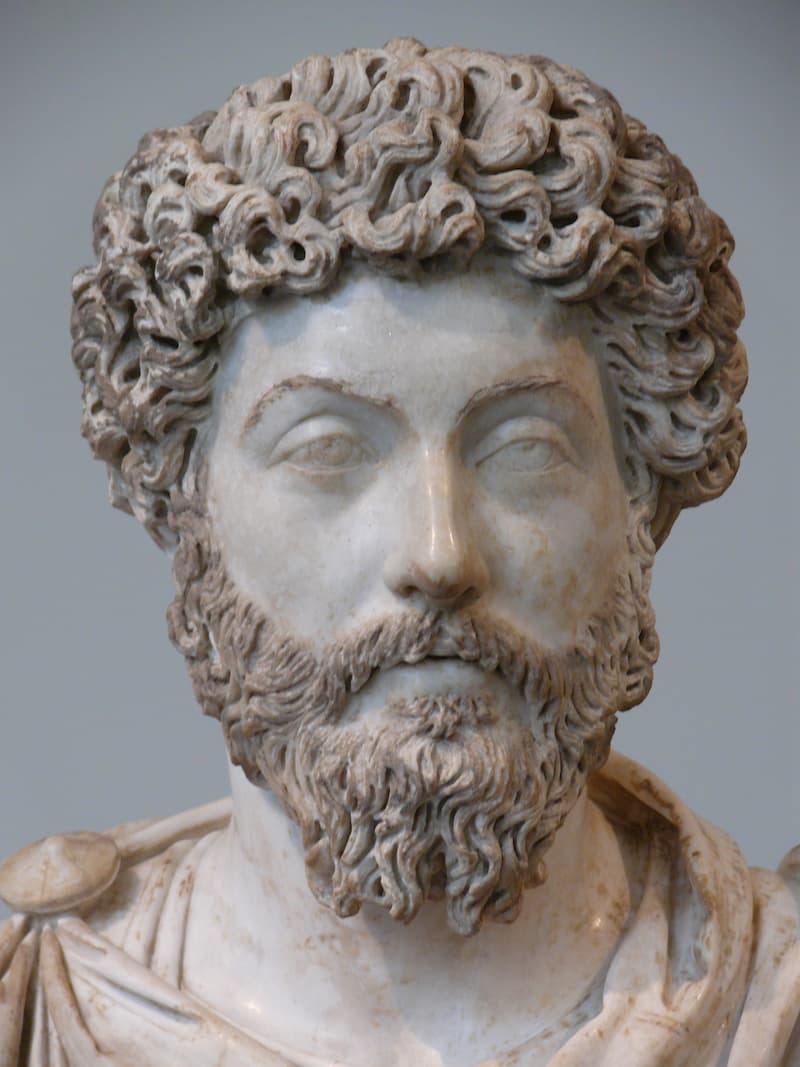
Personally, I follow the Stoic worldview7. I continue to live my life as normal, making decisions as if I had free will, using (or rather, allowing) knowledge from my experiences to influence my decision making positively, but I do not get hung up about having made a wrong decision, or be fixated with grievances to myself caused by others.
What happened, happened, and couldn't have happened any other way.
Morpheus, The Matrix Reloaded (2003)
Recently, I completed reading the book A Guide to the Good Life by William B. Irvine, which summarizes stoic insight from Marcus Aurelius, Seneca, Epictetus and Musonius Rufus. Briefly:
- Practice negative visualization regularly - imagine losing things and people you value most, as well as the loss of your own life
- Go further, and engage in voluntary discomfort - putting yourself in socially embarrassing situations e.g. dressing poorly, and physical suffering e.g. underdressing for the cold
- Realize that fame and fortune are not worth having - it is better if we can lessen our desires for them instead
- Tranquility is the goal
- Avoid befriending people who's values are corrupt
- Things which you have no control over - ignore
- Things which you have some control over - internalize your goals (e.g. in playing tennis, to play the best match possible), and not the outcome which you cannot control (e.g. winning the match)
- Things which you have complete control over - these are your goals and values. It could be argued that desires are uncontrollable.
- Be fatalistic with respect to the past: what has happened to us in the past, and at this very instant, are beyond our control, and so it is foolish to get upset about these things.
I've realized several benefits since practicing Stoicism:
- I feel more in control of my emotions, such as whether to be angry, annoyed, depressed, happy, or cheerful.
- I am less affected with other people's opinions of me.
- Guilt (whether from myself or others) affects me much less when making decisions.
- Most importantly (and paradoxically), I feel freeier - to do the things I want without regret or guilt, to feel good about my life no matter how stormy, and to love the people important to me.
I hope Stoicism helps you as much as it has helped me, to live life fully and experience all it has to offer.
-
I feel the strongest reason that we are not in control of our desires is our gender. It is the strongest determinant of our attraction to the opposite sex, and we were not free to make this decision, it having been decided at birth. ↩
-
Interestingly, illusionism posits that phenomenal properties are illusory - that our sense of seeing red, feeling happy and so on are a sort of 'misrepresentation' of complex patterns of brain activity. ↩
-
Sam Harris has put forth a good argument about this - namely that we have no control over what thoughts come into our mind. This has implications with regards to our available actions and subsequent thoughts. ↩
-
An interesting story on the lack of free will. ↩
-
We are not free, not to be free, as Sartre wrote: "Man is condemned to be free; because once thrown into the world, he is responsible for everything he does." ↩
-
Unless it was already determined that an individual would pursue fatalism. ↩
-
Some great books are Marcus Aurelius' Meditations, and Epictetus' Enchiridion. ↩